
 Team DailyPedia
As severe flooding continues to affect parts of Central Luzon and Metro Manila, Senator Bam Aquino is questioning why a proposed transparency measure aimed at strengthening public scrutiny of government spending has fallen significantly on Malacañang’s legislative priority list.

During a Senate budget briefing, Aquino pressed Department of Economy, Planning, and Development (DEPDev) Secretary Arsenio Balisacan over the status of the Citizen Access and Disclosure of Expenditures for National Accountability (CADENA) Act, also known as the “Blockchain the Budget Bill.”
According to Aquino, the measure—which ranked third among priority measures in 2025—has dropped to 41st on the latest priority list of the Legislative-Executive Development Advisory Council (LEDAC).
“Meron pong LEDAC measure na naipasa na po namin dito sa Senado na isulong na po natin. In 2025 priority measure po ito, in 2026 priority measure pa rin po ito. Parang nawala po ata ’yung CADENA or Blockchain the Budget Bill,” Aquino said.
“What’s the reason why it’s not on this list? Are you not supporting this bill, Secretary?”
Balisacan explained that Malacañang and congressional leaders had agreed to streamline the list and focus on key legislative measures that could realistically be passed within 12 months.
Aquino, however, questioned why CADENA would not make the cut considering the progress it has already made in Congress.
The Senate has passed the measure, while its counterpart in the House of Representatives has already advanced at the committee level.
“This bill, which will put the budget on blockchain, pati ’yung mga contractor, pati ’yung presyo ng semento, ng pako, at lahat-lahat, napag-usapan na po natin from 2025 na mahalaga po ito,” Aquino said.
“I want to understand: why is it not in the priority measure of the DBCC?”
The proposed CADENA Act seeks to establish a Digital Budget Platform where government agencies would be required to upload and regularly maintain detailed records related to the use of public funds.
These would include documents involving government contracts, project costs, bills of materials, procurement records, and other budget-related information.
The proposed system is intended to make records publicly accessible, traceable, verifiable, tamper-resistant, and open-source, providing citizens with a clearer view of how government money is allocated and spent.
The measure also provides for possible administrative and criminal penalties for government officials who fail to disclose required information or submit fraudulent documents.
The proposal has gained renewed relevance amid continuing public scrutiny of flood-control spending and questions surrounding allegedly irregular or substandard projects.
Aquino argued that calls from government and civil society groups supporting greater transparency should give the administration more reason to prioritize the measure.
“Alam ho natin lahat how powerful this bill can be,” he said.
“Napakarami na pong grupo ’yung nagsabi na nais nilang makitang pasado ang batas na ito, from inside the government, outside the government. Nagtataka po ako, bakit parang hindi natin ’to minamadali?”
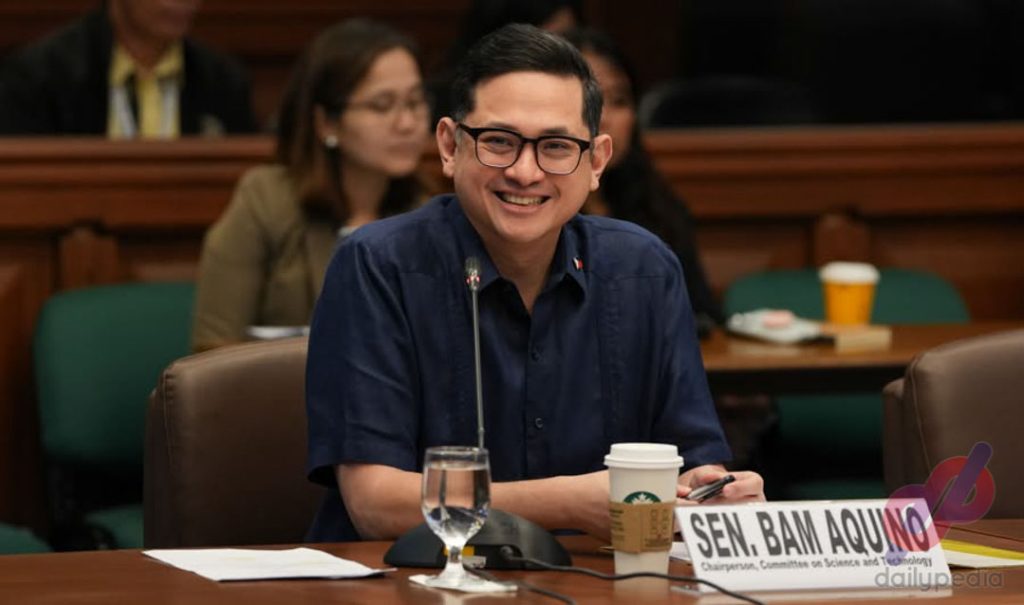
Aquino specifically recalled discussions during the height of the flood-control controversy, when transparency in infrastructure spending became an urgent public concern.
“Nung kasagsagan nung flood control scandal, we all agreed we would push for this, and push for full transparency,” he added.
With communities once again dealing with widespread flooding, questions over how public money for infrastructure and flood-mitigation projects is spent have remained in the spotlight.
Aquino maintained that prioritizing and eventually enacting the CADENA Act could provide a structural mechanism for citizens to scrutinize government projects rather than relying solely on investigations after alleged irregularities emerge.
He also argued that passing the transparency measure under President Ferdinand Marcos Jr.’s administration could become part of its lasting legacy—particularly at a time when public demands for greater accountability over government spending remain high.