 Team DailyPedia
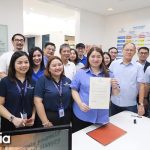
Senator Bam Aquino has secured P500 million in financial assistance for the Related Learning Experience (RLE) requirements of nursing and allied health sciences students under the 2026 national budget.

The funding was approved after the Bicameral Conference Committee adopted Aquino’s proposal to allocate the amount under the Maintenance and Other Operating Expenses (MOOE) of the Higher Education Development Program. The allocation is specifically earmarked as Financial Support for RLE Requirements in Allied Health Sciences Programs.
Allied health sciences programs covered by the funding include Nursing, Medical Technology or Medical Laboratory Science, Pharmacy, Physical Therapy, Occupational Therapy, Respiratory Therapy, Radiologic Technology, Midwifery, Nutrition and Dietetics, Speech-Language Pathology, Human Biology and other pre-med allied programs, Dentistry, Biochemistry, and Psychology.
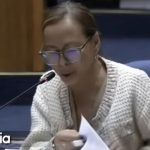
“Iyong RLE na napakamahal, maraming nagda-dropout na nursing students. Ngayon, may subsidiya, kasama na sila,” Aquino said.
He emphasized that the financial assistance is expected to ease the burden on students and their families, help prevent dropouts, and ensure the completion of required clinical training.
“Sa pamamagitan nito, mababawasan ang kanilang pasanin sa pag-aaral at makatutulong ito para maabot ang kanilang pangarap na magandang buhay, hindi lang para sa kanilang sarili, kundi para sa kanilang pamilya at mahal sa buhay,” he added.
Aquino said the issue was first raised to him during the campaign period for the 2025 senatorial elections, when nursing students shared the high costs associated with RLE, which is equivalent to on-the-job training and a requirement for graduation.
“Ipinaabot nila sa atin noon na maraming nursing students ang napipilitang mag-dropout dahil sa mahal na gastusin para sa RLE. Nangako tayo sa kanila noon na gagawan ito ng paraan,” he said.
Under a special provision in the 2026 budget, the P500 million will be used to provide one-time financial support to students in allied health sciences programs to help cover RLE-related expenses. Aquino said low-income students will be prioritized, with implementation guidelines to be issued by the Commission on Higher Education (CHED) to ensure equitable and efficient distribution.
To institutionalize the measure, Aquino has also filed Senate Bill No. 123, which seeks to make RLE free in State Universities and Colleges (SUCs) and Local Universities and Colleges (LUCs). Under the proposed bill, nursing students enrolled in private institutions may apply for Tertiary Education Subsidy (TES) assistance to cover RLE expenses.
Aquino also noted that his push for increased funding for higher education was realized after the bicameral committee approved P67 billion for the implementation of the Free College Law (Republic Act No. 10931), along with increased funding for TES.
The committee likewise approved a P1.38 trillion education budget for 2026—the highest in Philippine history—including P68 billion for classroom construction and P25.6 billion for the School-Based Feeding Program.